
Legal project budgeting is the discipline of turning a matter’s scope into a structured, defensible forecast of time, resources and fees, and then managing the matter against that forecast. A sound budget starts with a clearly defined scope, is built phase by phase from historical data, is communicated to the client as a conditional estimate rather than a quotation, and is revisited whenever scope, timeline or cost changes. This guide sets out how South African practitioners and in-house teams can do so in a manner that protects both the client relationship and the profitability of the matter.
Key takeaways
- A budget is only as reliable as the scope behind it. Define deliverables, inclusions, exclusions and assumptions before any figure is committed.
- Build the estimate by phase and task, using historical matter data rather than doubling a gut-feel hourly figure.
- In South African practice, distinguish clearly between a fee estimate and a quotation, and record the conditions on which the estimate rests.
- Track actual spend against the budget continuously, and document every variation to scope, timeline or fees in writing.
- Budgeting is a learnable professional capability. Structured training in legal project management develops it systematically.
Table of Contents
- Why budgeting belongs inside the matter plan
- Step one: scope the matter before you price it
- Step two: structure the budget by phase and task
- Fee estimate or quotation: a distinction South African practitioners must get right
- Step three: track actual spend against the budget
- Step four: manage change without damaging the relationship
- Step five: communicate the budget clearly
- Using budgets to improve profitability and cost control
- Common budgeting mistakes
- Building the capability across your team
- FAQ
- Sources
Why budgeting belongs inside the matter plan
A legal budget is not an administrative afterthought produced to satisfy a client’s procurement department. It is the financial expression of the matter plan. Every assumption about the work to be done, who will do it and how long it will take is already in the plan. The budget simply puts a number against each of them.
That is why the top-ranking material on this topic treats budgeting as one component of legal project management rather than a separate exercise. The task of estimating how long each activity will take, and therefore what it will cost, flows from the project plan. Where the plan is vague, the budget will be vague, and the first unexpected development turns it into a negotiation.
The commercial rationale is equally direct. Clients increasingly expect predictability. Firms and legal departments, for their part, need to know whether a matter is profitable while it is still possible to do something about it. For a deeper treatment of the commercial side, see our discussion of value-based pricing and eliminating wastage.
Step one: scope the matter before you price it
Every budgeting failure that is later described as a cost overrun usually began as a scoping failure. Writing in De Rebus, practitioners are advised to clarify the client’s needs and expectations and the ambit of the matter at the outset, to set timelines, to plan a schedule and structure, and to consider resource options (De Rebus, Controlling outcomes: project management).
In practical terms, a scoping conversation should settle the following:
- The outcome the client actually wants. A client who says “we need a shareholders’ agreement” may in truth need a negotiated exit mechanism for a departing founder. The two matters carry very different budgets.
- Deliverables. What documents, advices, filings or appearances will be produced?
- Inclusions and exclusions. The Queensland Law Society recommends defining what is in and out of scope, identifying major risks, and establishing protocols for managing variations at the start of the matter (Queensland Law Society, Project Management in Legal Practice). The principle applies equally in South African practice.
- Assumptions. Number of parties, volume of documents, level of counterparty cooperation, whether a regulator’s approval is required.
- Communication preferences. The format and frequency of updates, and who within the client organisation should receive them.
A worked example: a mid-sized firm is instructed to review and negotiate a supply agreement for a manufacturing client. The assumptions note records that the counterparty will respond within ten business days, that no more than two rounds of redrafting are anticipated, and that foreign-law advice is excluded. Each of those assumptions is a lever. If any one of them fails, the budget conversation with the client has a factual anchor rather than an awkward surprise.
Step two: structure the budget by phase and task
A single global figure tells a client very little and tells the firm even less. A more useful structure is hierarchical. The International Association of Defense Counsel published a case study describing a detailed matter budget broken down by phase, task, subtask, assigned resource, estimated time, rate and total spend, supported by a statement of work that sets out scope, assumptions and risks (IADC, Matter Budgets Matter).
Although the study comes from a litigation-defence setting, the architecture transfers readily to transactional, regulatory and advisory work. A simplified illustration for a commercial transaction follows. The hours and rates are placeholders for you to replace with your own data.
| Phase | Typical tasks | Resource | Estimate basis |
|---|---|---|---|
| 1. Intake and scoping | Instruction meeting, conflict check, engagement letter | Partner, associate | Historical average for comparable matters |
| 2. Due diligence | Document review, issues list, report | Associate, candidate attorney | Document volume multiplied by review rate |
| 3. Drafting and negotiation | First draft, redrafts, calls with counterparty | Associate, partner review | Number of rounds assumed in scope |
| 4. Conclusion | Signature logistics, closing checklist, filing | Associate, paralegal | Fixed allowance |
| 5. Contingency | Unforeseen complications | As required | Stated percentage, expressly conditional |
The value of the table lies in its second-order effects. Each row can be compared with the same row on previous matters. Each assumption can be tested. And when the client asks why a figure has moved, the answer is a phase and a task, not a shrug.
Estimating hours by level of seniority
Estimate time per timekeeper level rather than for the matter as a whole. A phase that appears affordable at a blended rate may conceal an over-reliance on partner time, and a phase that looks expensive may simply be the one in which delegation is not yet planned. Leverage is a budgeting decision, and it is better made deliberately at the planning stage than discovered on the first invoice.
Use historical data, not instinct
The IADC case study reports that using historical matter data and standardised templates improved consistency, exposed variation attributable to staffing and efficiency, and supported more reliable estimates and client communication (IADC, Matter Budgets Matter). The practical lesson is modest but important: record what matters actually cost, by phase, and keep the record in a form that can be searched. Even a well-maintained spreadsheet of the last twenty comparable matters will outperform an estimate produced from memory.
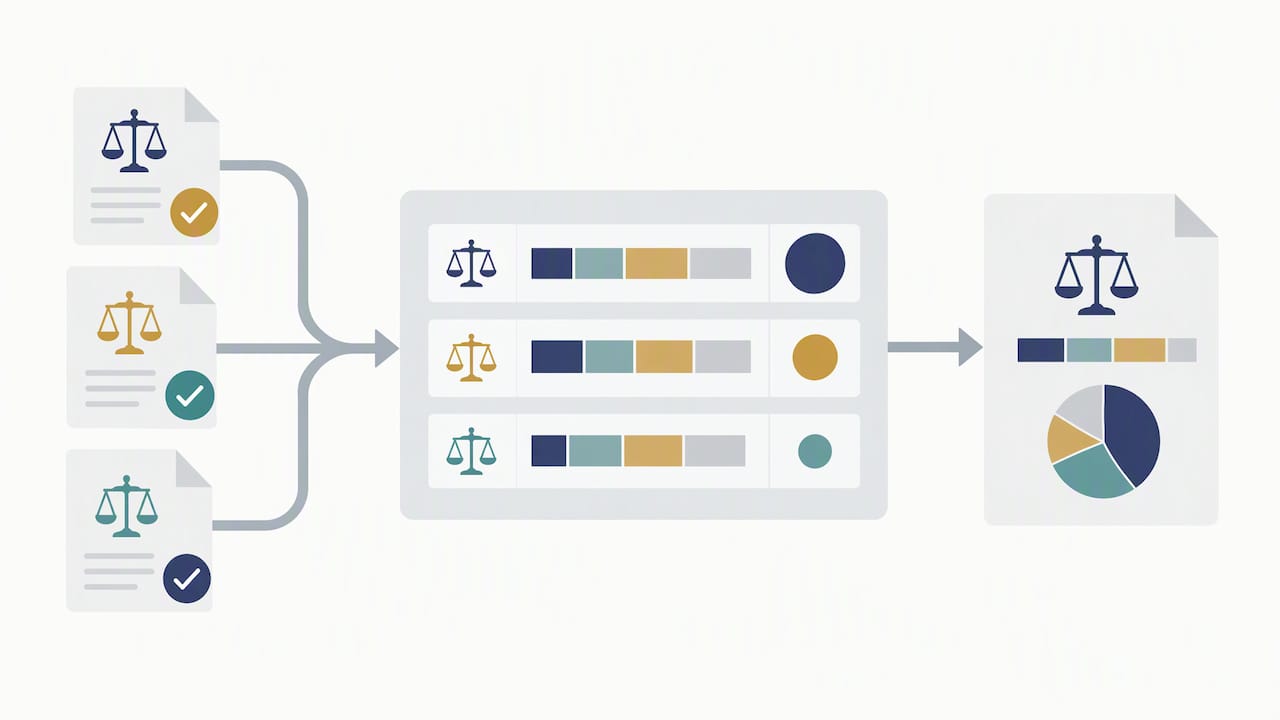
Absent such data, a firm can begin building it today. Start with one practice area, define five or six standard phases, and require fee earners to code their time to those phases from the next matter onwards. Within a year, the firm will have the beginnings of a reliable baseline.
Fee estimate or quotation: a distinction South African practitioners must get right
Budget figures given to clients carry legal and reputational weight. A recurring theme in South African professional commentary is that fees should be presented as estimates, not quotations. De Rebus cautions against presenting fees as a quotation and against failing to make an estimate conditional on unforeseen complications, or to explain the escape clause to the client (De Rebus, Calculating legal costs: changing the way we charge). The same article advises that an engagement letter should clearly distinguish between the two, and that a fee estimate should be conditional and contain an escape clause for unforeseen complications that increase the work beyond the original projection.
In drafting terms, this suggests that every budget delivered to a client should be accompanied by:
- a statement that the figure is an estimate and not a fixed price, unless a fixed fee has expressly been agreed;
- the list of assumptions on which it rests;
- the events that will prompt a revised estimate;
- the process by which the client will be notified and asked to approve any increase.
The point is not defensive. A client who has been told, at the start, what could change the number will generally respond constructively when it does change. A client who was handed a single figure without context will not.
Practitioners should of course consult the current rules and guidance of the Legal Practice Council and their own professional indemnity insurer on fee disclosure, since these govern what must be communicated to a client and when.
Step three: track actual spend against the budget
A budget that is not monitored is merely a forecast. Tracking turns it into a management instrument. At a minimum, a legal team should be able to see, at any point in the matter, the time recorded but not yet billed, invoices pending, accruals, spend to date and the remaining budget.
Dedicated legal-spend platforms offer real-time reports of exactly this kind, covering unbilled time, pending invoices, accruals, total spend, cost per matter, timekeeper rates and billing-guideline compliance (Thomson Reuters, Legal Tracker reporting and analytics). The technology is useful, but the discipline matters more than the tool. A firm without consistent time-recording habits will simply produce inaccurate reports faster.
A sensible monitoring rhythm for most matters is as follows:
- Weekly: the matter lead reviews recorded time against the phase budget.
- At each phase boundary: the team compares actual with estimate, records the variance and its cause, and updates the forecast to completion.
- At a threshold: many teams agree an internal trigger, for example when a phase reaches 75% of its budget, at which the matter lead must report on remaining work before further time is spent.
The threshold figure is an internal convention, not a rule; set it to suit the size and risk profile of your matters.
Deciding where technology adds genuine value
Not every budgeting problem needs software. Before purchasing a tool, a firm or department should ask what decision the tool will improve. If the answer is “we cannot currently see unbilled time by phase”, a reporting tool may add real value. If the answer is “our fee earners do not agree on what a phase is”, the intervention is process design and training. Part of the value of structured legal project management training lies in making this distinction before money is spent on automation.
Step four: manage change without damaging the relationship
Scope will move. The question is whether the movement is managed or merely absorbed. De Rebus guidance is that, when changes occur, lawyers should discuss and agree the impact on scope, timeline and fees with the client, and record the variation in an addendum or a new written agreement, so that both parties remain aligned and disputes over unauthorised work are avoided (De Rebus, Managing the risk of scope creep).
A workable change protocol has four elements:
- Identify the trigger. Which assumption has failed, and when was it noticed?
- Quantify the effect. What is the revised scope, timeline and cost, expressed phase by phase?
- Obtain agreement before proceeding. Where practicable, the client approves the variation before the additional work is done.
- Document it. A short addendum or confirming email that cross-refers to the original engagement terms.
The benefit is twofold. The client retains control of its spend, and the firm avoids the uncomfortable position of having performed work it cannot confidently bill.
Step five: communicate the budget clearly
Communication should be regular, substantive, informative and reliable, and it should be linked to the project plan. De Rebus also advises clarifying at the outset the client’s preferences on format and on who should be included (De Rebus, Controlling outcomes: project management). The same article makes a point that bears emphasis for budgeting: excellent service is judged by the client’s definition of success, not the lawyer’s.
In practice, a good budget update answers four questions in a few lines: where are we against the estimate, what has changed since the last report, what is the forecast to completion, and is a decision required from the client? In-house counsel reporting to a finance director or executive committee will benefit from the same format, since it translates easily into the language of cost centres and approvals.
Using budgets to improve profitability and cost control
Budgeting is also a management tool for the firm or department as a whole. Once a body of historical data exists, it becomes possible to see which practice areas and matter types are consistently profitable, where write-offs cluster, and where estimates are systematically optimistic. For law firms, this informs pricing, staffing and decisions about which work to pursue. For a deeper look at the economics, consider our guide to law firm project management in South Africa.
On the client side, the benefits can be considerable. The Association of Corporate Counsel reports that Anglo American’s South African legal-spend programme used spend analysis, tighter scoping and historical supplier data, and states that it reduced outside counsel from 75 firms to 14 and spend by 35% over three years (ACC, 2019 Value Champions). That is one organisation’s reported result, and few teams will replicate it exactly, but it illustrates why corporate clients now ask their external counsel for budgets and why firms that can supply credible ones are better placed to retain instructions.
Common budgeting mistakes
- Pricing before scoping. A number given in the first call becomes the anchor, however thin the information behind it.
- Calling an estimate a quotation. As noted above, this exposes the practitioner when unforeseen complications arise.
- Omitting contingency. Unknowns are a feature of legal work. Acknowledge them explicitly and conditionally.
- Ignoring seniority mix. A budget that does not state who will do the work cannot be managed.
- Failing to record the variance. If the reason a matter overran is not captured, the next budget will repeat the error.
- Treating the budget as a once-off document. It should be reviewed at each phase boundary.
Building the capability across your team
Budgeting skill is rarely taught in legal education, yet it affects every matter a firm or department takes on. The Applied Legal Project Management Course from PocketAdvisor is built to address that gap. It brings structure, commercial awareness and a continuous-improvement mindset to legal work, which makes it more than traditional project management: it equips lawyers to scope matters, manage budgets, resources and risk, and to judge where technology and automation add genuine value. PocketAdvisor holds exclusive rights in South Africa to provide the internationally accredited programme of the International Institute of Legal Project Management (IILPM). Students who successfully complete the course receive IILPM accreditation, subject to the programme’s completion requirements, a professional credential that helps lawyers strengthen their expertise and distinguish themselves in a competitive profession.
The course is priced at R9 500 as a once-off fee, and a Premium option is available at R19 995. Details are on the Legal Project Management Course page.
Explore PocketAdvisor’s internationally accredited Legal Project Management Course: https://pocketadvisor.co.za/legal-project-management-course/

For further reading on related disciplines, see our guides on how to manage a legal matter and attorney time management, and our overview of legal project management for lawyers.
FAQ
What should a legal project budget include?
A legal project budget should set out the scope and its assumptions, the phases and tasks, the estimated time by timekeeper level, the applicable rates, a conditional contingency and the events that would trigger a revised estimate. The IADC case study describes this structure as phase, task, subtask, resource, time, rate and total, supported by a statement of work (IADC). Disbursements should be shown separately.
What is the difference between a fee estimate and a quotation?
A quotation is a fixed price the practitioner is expected to honour. An estimate is a conditional forecast that may change if unforeseen complications increase the work. De Rebus advises that an engagement letter should distinguish the two clearly and that an estimate should include an escape clause (De Rebus).
What should I do when the scope of a matter changes mid-way?
Discuss the effect on scope, timeline and fees with the client, and record the agreed variation in an addendum or a new written agreement before the additional work proceeds where practicable. This keeps both sides aligned and avoids disputes about unauthorised work (De Rebus).
How often should a matter budget be reviewed?
At least at every phase boundary, and whenever an assumption fails. Many teams also review recorded time weekly and set an internal trigger, for example at a stated percentage of a phase budget, to prompt a forecast to completion. The frequency should reflect the size and risk of the matter.
Sources
- De Rebus, Controlling outcomes: project management
- De Rebus, Calculating legal costs: changing the way we charge
- De Rebus, Managing the risk of scope creep
- Queensland Law Society, Project Management in Legal Practice
- IADC, Matter Budgets Matter
- Thomson Reuters, Legal Tracker reporting and analytics
- ACC, 2019 Value Champions: Anglo American and Exigent
Recommended
- Legal Project Management: A 2026 Guide for SA Practice
- Legal Project Management for Lawyers
- Law Firm Project Management: A 2026 Guide for SA Practices
This article is for educational and informational purposes only. It is not a substitute for professional advice.